
The National Resistance Movement (NRM), led by President Yoweri Kaguta Museveni as its National Chairman, has registered a remarkable performance in Sironko District, effectively displacing the Forum for Democratic Change (FDC) from the district’s top political positions.
Look at what other Nrm party district leadership is doing for it’s people and compare it with Busia where Nrm t-shirts, mineral water, trasport refund, free rides in trucks,meat and rice, entertainment by rouge dancers and empty promises is what voters are settling for.
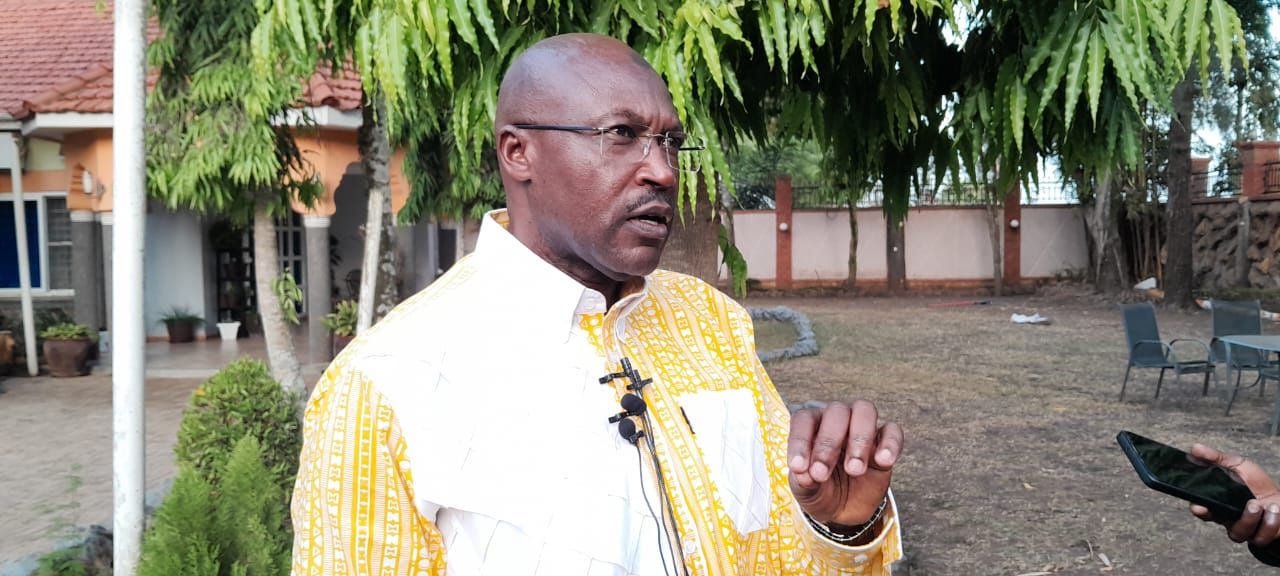
Speaking to the media, the NRM Chairman for Sironko District, Hajji Suleiman Mafabi Lumolo, attributed the victory to the commitment of the new NRM leadership in the district and the strong unity within the party.
He noted that this collective effort enabled the party to mobilise effectively and secure a sweeping victory.
Hajji Lumolo commended the NRM Secretariat for what he described as tireless grassroots mobilisation, moving from village to village and parish to parish. He said this approach encouraged massive voter turnout in support of President Museveni and all NRM flag bearers in the district.
He explained that in the previous general election, the NRM did not perform well in Sironko, as President Museveni garnered only 52 percent of the vote. At the time, the Woman Member of Parliament was an Independent candidate, both constituency Members of Parliament were from FDC, and the District Chairperson was also from the opposition FDC.
According to Hajji Lumolo, having opposition leaders in key positions negatively affected service delivery in the district, as they allegedly worked to frustrate the government’s vision.
He cited the poor road network in Sironko as an example, despite the Woman Member of Parliament, who also serves as the State Minister for Karamoja, Hon. Florence Nambozo, being the Chairperson of the Sironko district roads Committee.
The NRM Chairman further revealed that he consistently shared information received from the NRM Secretariat with district leaders, who in turn disseminated it to sub-county, parish, and village structures. He said this coordinated communication played a key role in enabling the NRM to win all seats in the district. He added that if the party maintains this strategy, it will remain in power for decades.

Hajji Lumolo highlighted several government achievements in Sironko, including the construction of a new tarmac road running from Namagumba through Budadiri to Nalugugu.
He also mentioned the establishment of the Professor Dan Nabudere Memorial Institute, aimed at providing hands-on technical and vocational skills to youths, especially school dropouts in the Elgon region. In addition, he pointed to the UGX 47 billion Wapakhabulo Memorial College of Nursing and Midwifery in Sironko District, which will train health professionals.
He also noted that many residents have benefited from the Parish Development Model (PDM) and Emyooga funds, which have helped improve household livelihoods. He added that President Museveni has indicated plans to increase PDM funding from UGX 100 million to UGX 200 million per parish.
Expressing optimism, Hajji Lumolo said the newly elected NRM Members of Parliament and District Chairperson are young, energetic, and capable of delivering improved services to the people of Sironko.
He concluded by thanking the people of Sironko for entrusting the NRM with leadership and called for unity now that the election period has ended. He urged residents to put aside political differences and work together to enhance service delivery and development in the district.
 Bantu MEDIA